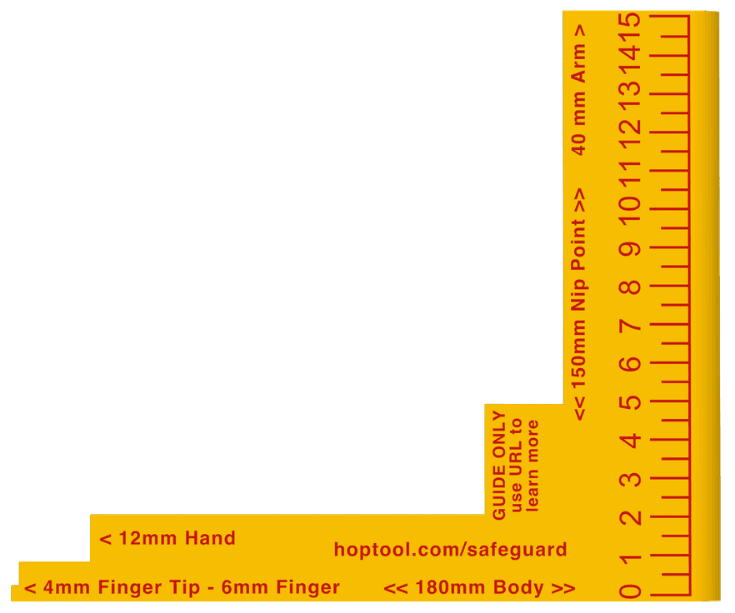
Machinery Safeguarding Ruler
The Machinery Safeguarding Ruler is a quick field tool designed to help workers, Worker Advocates, Supervisors and Safety practitioners explore whether someone could reach a machinery danger zone. Use the ruler to measure the opening Then use the resources to understand what that it means.
Measure the GAP
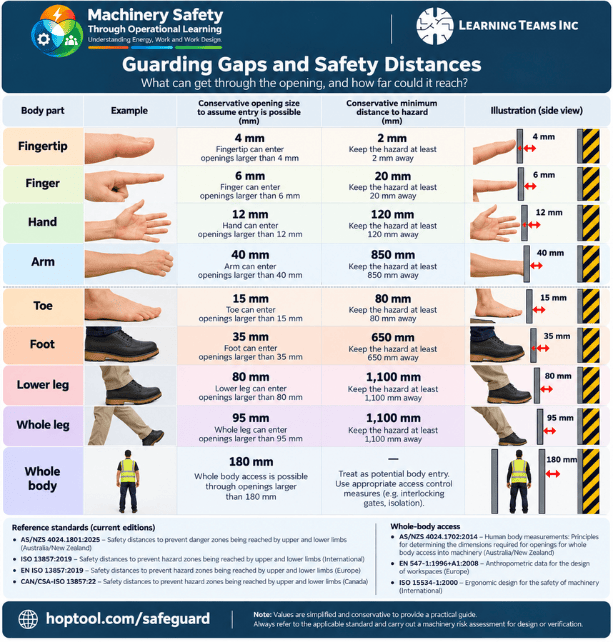
A small opening may allow a fingertip or finger through. A larger opening may allow a hand, arm, leg or even the whole body to enter. But measuring the gap is only the start. Ask:
What could get through? A fingertip, finger, hand, arm, foot, leg or body?
How far away is the danger? Could that body part actually reach the hazard?
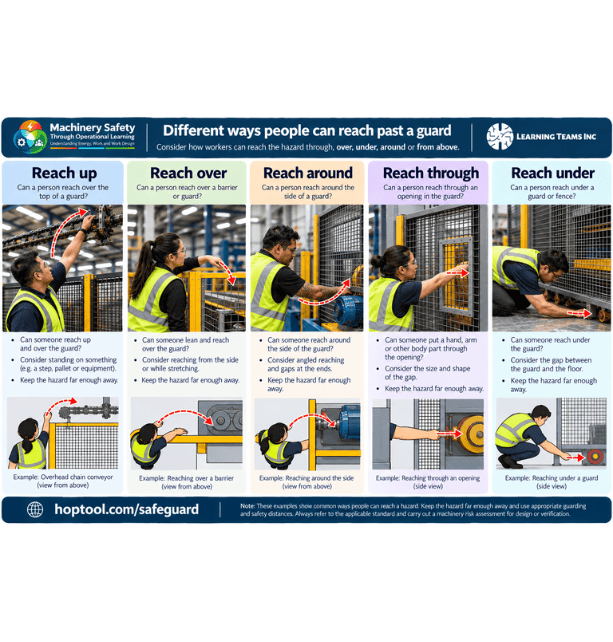
Could someone reach another way? Look through, over, under and around the guard.
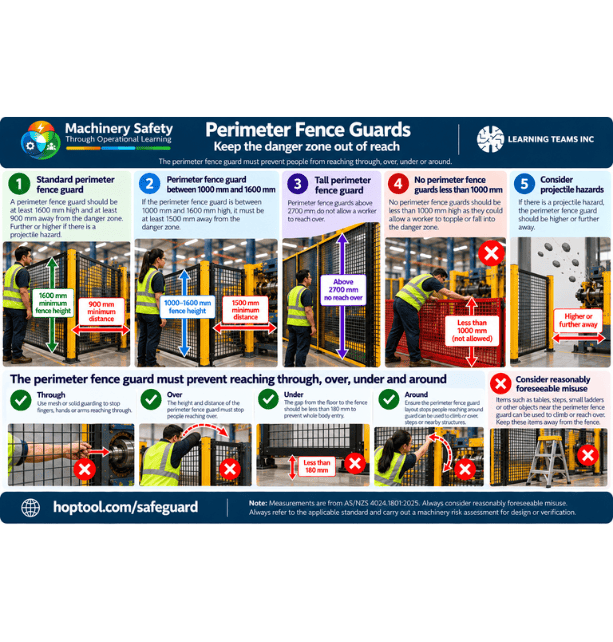
Could something nearby change the reach? A pallet, table, bin, platform or step ladder may allow someone to climb or reach further.
What happens during real work? Consider cleaning, maintenance, clearing jams, adjustments and other tasks where people may need to get closer to the machinery.
MEASURE → IDENTIFY → LOOK → CHECK
MEASURE: Use the ruler to measure openings and gaps in the guarding.
IDENTIFY: Use the body-part guide to identify what part of the body could potentially enter the opening.
LOOK: Look beyond the measurement. Could someone reach through, over, under or around the guard?
CHECK: Check the distance from the guard or opening to the danger zone. The opening size and the distance to the hazard need to be considered together.
Don't forget reasonably foreseeable misuse
Good guarding considers more than how equipment is supposed to be used. Look around the perimeter fence guard. Could a step ladder, table, pallet, bin, platform or other nearby object reasonably be used to climb, stand on or reach over the guard? Also consider whether gaps could develop because a guard is moved, damaged, modified or incorrectly replaced.
The ruler starts the conversation
The ruler is a quick screening and learning tool, not a substitute for machinery risk assessment, competent design or verification. If something doesn't look right, don't just measure the guard. Ask how someone could actually reach the danger. The resources are based on machinery safeguarding principles and safety-distance requirements. Always check the applicable current standard and any machine-specific requirements when designing, modifying or verifying machinery guarding.
Don't just measure the guard, consider how the work is really done.