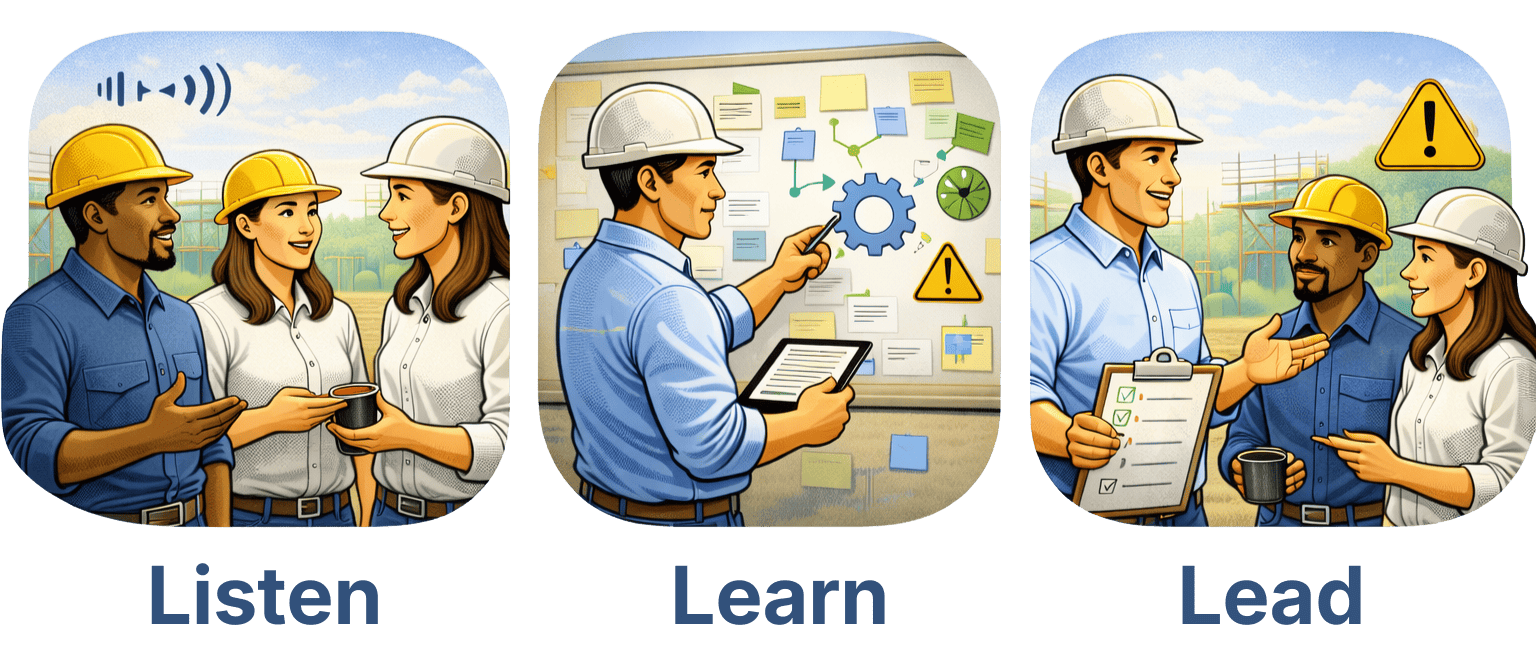
The 3Ls™
Leader-Led Work Insights
Supporting leaders to engage workers in meaningful conversations that build understanding of everyday work, reveal system conditions, and strengthen the capacity for work to go well.
This is not about observation, inspection, or behavior correction. It is about learning before making changes and improvement.

Before You Start: Leader Intent Check
Before engaging the frontline, ask yourself:
- Am I here to learn, not judge?
- Am I focused on the system and conditions, not the people?
- Am I willing to pause fixing and sit with what I hear?
If the answer is “not yet,” pause and reset.
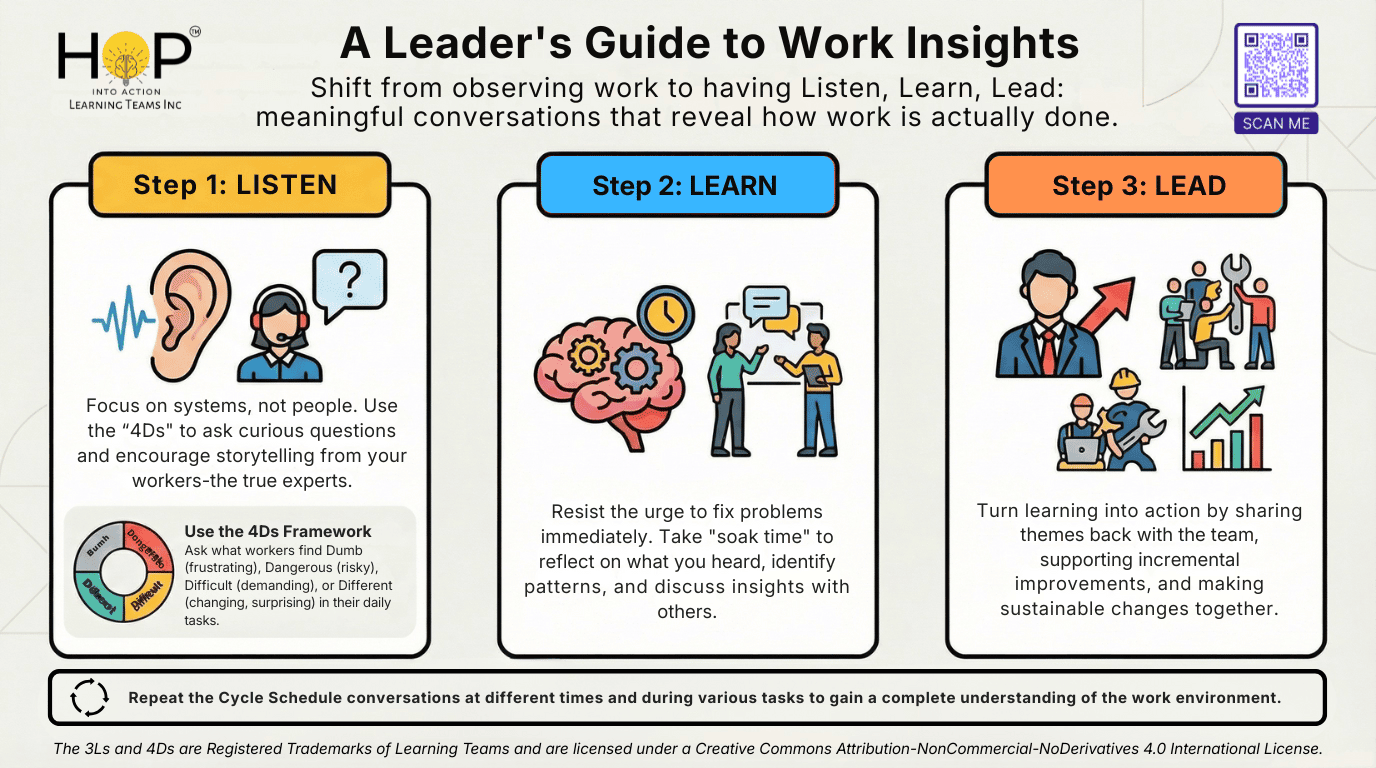
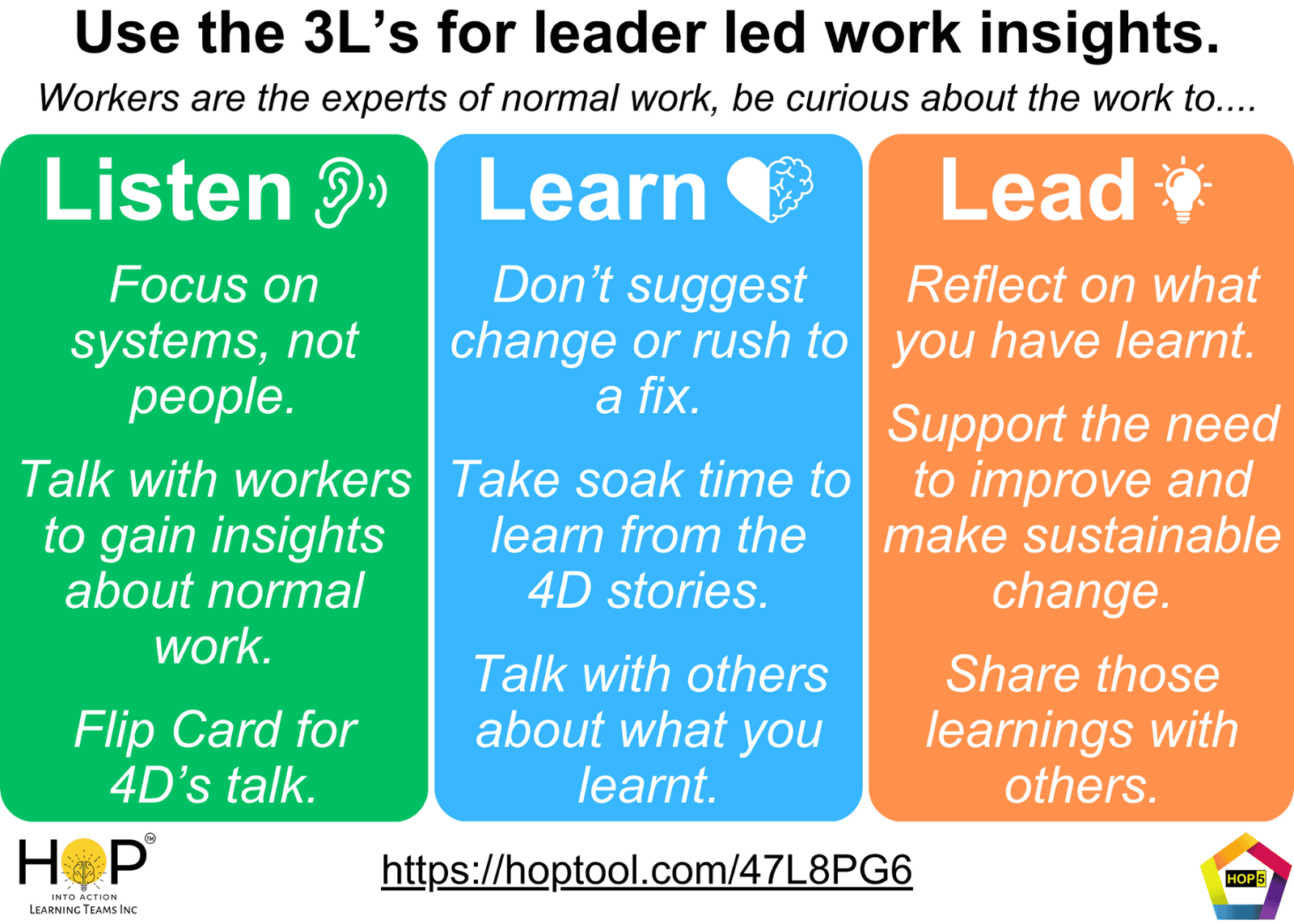
STEP 1: LISTEN - Focus on systems, not people
You go to where work is successfully performed and engage workers as the experts of that work. This is not a performance evaluation. This is a conversation, not an observation. Leader behaviors that matter here:
- Ask open questions
- Let workers tell stories
- Resist the urge to explain, defend, or solve
- Take notes on conditions, constraints, trade-offs


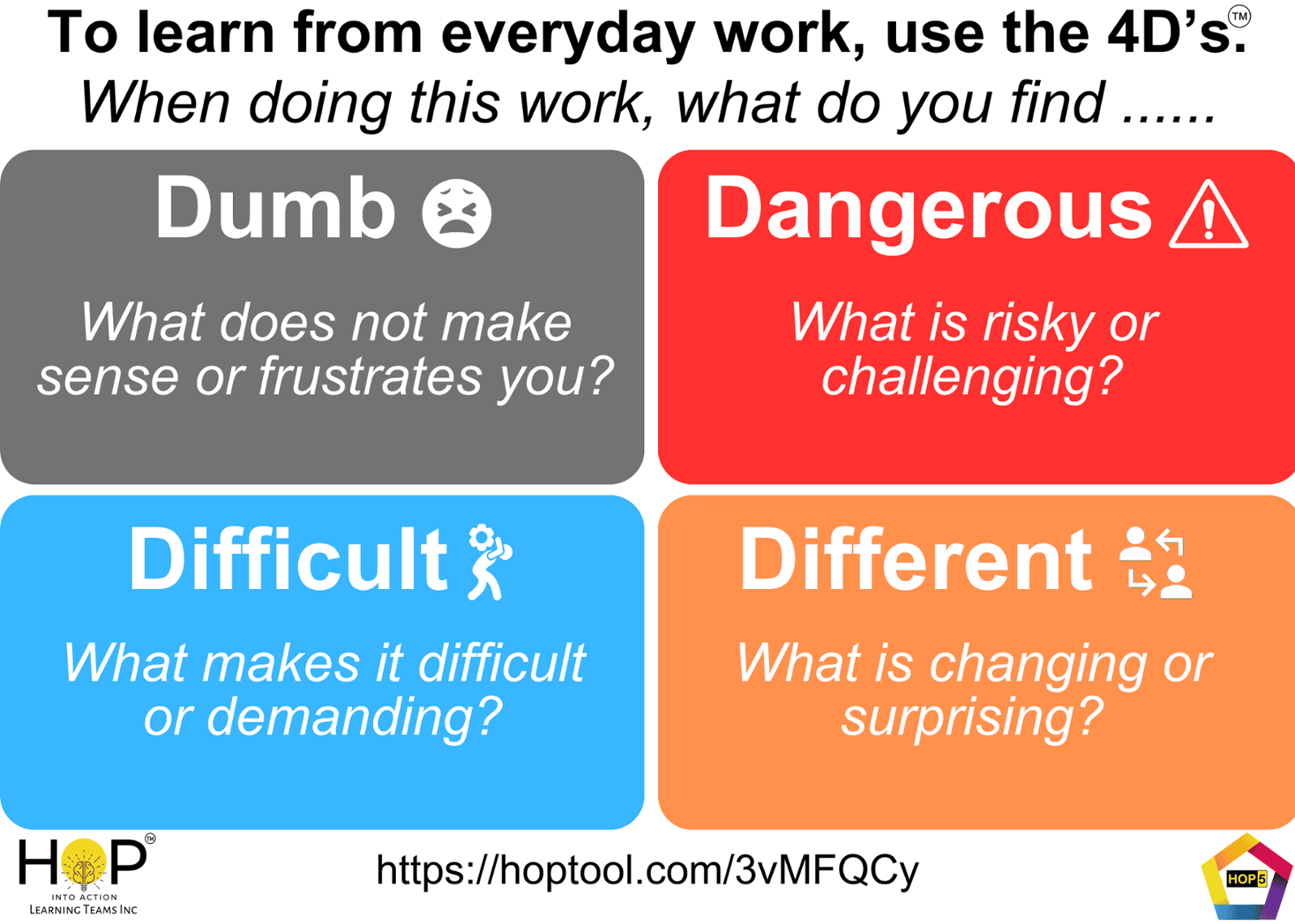
Listening with the 4Ds®
Use when you want to surface work challenges, weak signals, and risk capacity.
Ask open, curiosity-based questions such as:
- Dumb: “When doing this work, what doesn’t make sense or frustrates you?”
- Dangerous: “What feels risky, challenging, or mentally taxing?”
- Difficult: “What makes this work harder or more demanding than it should be?”
- Different: “When is this work different, changing, or surprising?”
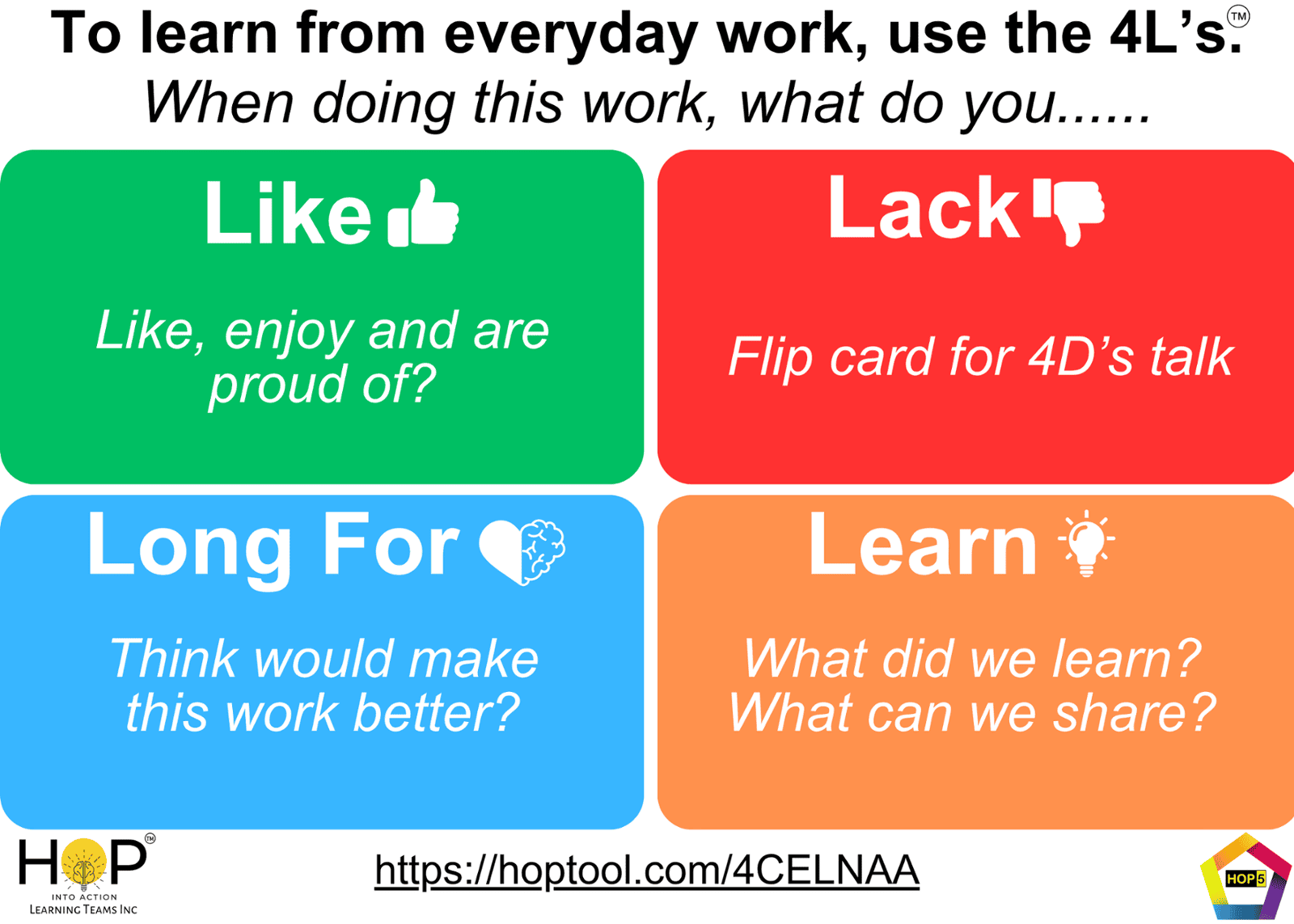
Listening with the 4Ls®
Use when you want a balanced reflection of what helps and hinders work.
- Like: What works well and supports success
- Lack: Where the work struggles (unpacked using the 4Ds)
- Long For: What workers believe would improve the work
- Learned: Insights worth sharing more broadly
STEP 2: LEARN - Don’t suggest change or rush to a fix
Learning happens after the conversation. This is where leaders:
- Create soak time (reflection and time)
- Reflect on patterns, not single points
- Talk with others about what was heard
Ask yourself:
- What conditions repeatedly shaped decisions?
- Where does Work As Done clearly diverge from Work As Designed or Planned?
- What helps work go right that we rarely notice?
- Where are workers having to make tradeoffs to get work done?
Fixing too early shuts down learning.

STEP 3: LEAD - Turn learning into sustainable change
Leading means creating the conditions for improvement, not issuing solutions. This may include:
- Sharing themes back with the workgroup
- Connecting insights across teams
- Initiating a Learning Team where deeper exploration is needed
- Supporting small, incremental improvements
We correct work, not people.
Step 4: MIX IT UP & REPEAT -
Learning changes with time
Schedule these conversations:
- At different times of day
- Across different shifts
- During routine and high-risk work
This reveals:
- Fatigue effects
- Handover gaps
- Workload/Workpace variation
- Changing risk capacity and risk controls
- Ability for supervisors to supervise
We understand how work changes in different context and times.

What good follow through looks like
Workers see their insights respected.
Learning is shared beyond one crew.
Improvements align with how work is actually done.
Leaders close the loop.
Common traps to avoid
Turning conversations into audits
Correcting behaviour in the moment
Asking leading questions
Treating the 4Ds or 4Ls as a checklist
Confusing speed with effectiveness
Resources to support your learning journey

Introduction to HOP on Amazon
Learning and Improving for BetterWork on Amazon